

How Plumbers Detect Leaks — The Technology and Process Explained
Modern leak detection is nothing like the old days of tearing up floors and hoping for the best. Today’s professional plumbers use sophisticated equipment that can pinpoint a leak beneath several inches of concrete without removing a single tile. If you have ever wondered what actually happens when a plumber comes to find a hidden leak, this post breaks it down in plain language.
Table of Contents:
- Why Leak Detection Requires Specialists
- The Tools Professional Plumbers Use
- The Detection Process Step by Step
- What Happens After the Leak Is Found
- DIY Leak Checks You Can Do First
- FAQ
Why Leak Detection Requires Specialists?
Not every plumber is equipped or experienced to find hidden leaks — especially slab leaks. General plumbers handle repairs well but leak detection beneath a concrete foundation requires specific equipment and the training to use it accurately. Hiring someone without this capability often results in unnecessary demolition, missed leak locations, and repairs that do not solve the actual problem.
When you call 911 Plumbing & Drain Rescue for leak detection you get a technician who uses professional-grade equipment and has years of experience interpreting what that equipment finds.
The Tools Professional Plumbers Use
Acoustic Listening Devices These are essentially very sensitive microphones placed against the floor or ground surface. They amplify the sound of pressurized water escaping a pipe — a sound that is completely inaudible to the human ear without amplification. As the technician moves the device across the floor, the signal gets stronger as it approaches the leak location.
Thermal Imaging Cameras Thermal cameras detect infrared radiation — essentially heat. A hot water leak beneath the slab creates a temperature signature on the surface above it that shows up clearly on a thermal camera display. Cold water leaks create the opposite effect in warmer conditions. This technology allows us to see through floors without touching them.
Pipe and Line Tracing Equipment Before detection equipment is deployed, the technician needs to know exactly where the pipes run beneath the slab. Electronic line tracing sends a signal through the pipe that can be tracked from above, creating an accurate map of the plumbing layout beneath the foundation.
Pressure Testing Systems By isolating sections of the plumbing system and monitoring pressure over time, we can confirm which line is leaking and roughly how significant the leak is. This helps narrow down the search area before acoustic and thermal tools are deployed.
Video Camera Inspection For drain line leaks, a waterproof camera is sent through the pipe to visually identify cracks, root intrusion, joint failures, or collapses from the inside. This provides definitive visual confirmation of the problem location and condition.
The Detection Process Step by Step
Step 1 — Initial Assessment The technician asks about your symptoms — rising water bills, sounds, floor spots, pressure changes — and visually inspects accessible plumbing areas to rule out above-slab sources first.
Step 2 — Pressure Test The plumbing system is pressure tested to confirm a leak exists and to identify which line is involved — hot water supply, cold water supply, or drain line.
Step 3 — Line Tracing Electronic equipment maps the pipe routing beneath the slab so the technician knows exactly where to focus the detection equipment.
Step 4 — Acoustic and Thermal Scanning The technician systematically scans the floor surface using acoustic listening devices and thermal imaging cameras, narrowing down the leak location progressively.
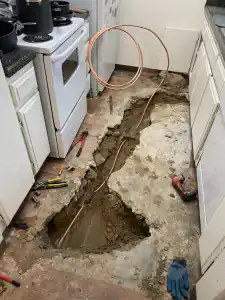
Step 5 — Leak Location Marked Once confirmed, the exact leak location is marked on the floor. This is the only spot that needs to be accessed for repair — no guesswork, no unnecessary demolition.
Step 6 — Repair Plan Presented The technician explains what was found, where the leak is, what repair options are available, and provides a written estimate before any work begins.
What Happens After the Leak Is Found
Once the leak is located you have options. Depending on the condition of the surrounding pipe, the location of the leak, and the overall age of your plumbing system, the right repair might be a spot fix through the slab, a pipe reroute above the slab, or a full repipe if the system is broadly compromised. A good plumber explains all of these options and lets you make the decision — not the other way around.
Frequently Asked Questions
How accurate is acoustic leak detection?
In experienced hands with quality equipment, acoustic detection is accurate to within a few inches. This is why our access points are targeted and minimal.
Yes. Acoustic and thermal equipment works through tile, hardwood, carpet, and concrete without any surface removal.
Most residential leak detection visits are completed within 2 to 3 hours depending on the size of the home and complexity of the layout.
In rare cases where acoustic and thermal methods are inconclusive, additional pressure testing and line isolation can help narrow down the location. We do not give up.
Some policies cover detection costs as part of a slab leak claim. Check your specific policy before the visit.