

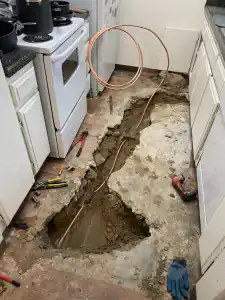
When To Repipe a House — 8 Signs It Is Time for New Pipes
Most homeowners do not think about their pipes until something goes wrong. But waiting for a catastrophic failure is almost always more expensive than recognizing the warning signs early and acting on them. If your home is more than 30 years old, there is a reasonable chance your plumbing system is trying to tell you something. Here is how to listen.
Table of Contents:
- How Long Do Pipes Actually Last
- 8 Signs You Need to Repipe
- What Happens If You Keep Patching
- The Repiping Process Explained
- Cost of Repiping vs Cost of Waiting
- FAQ
How Long Do Pipes Actually Last
| Pipe Material | Expected Lifespan |
|---|---|
| Galvanized Steel | 20-50 years |
| Original Copper | 50-70 years (varies with water chemistry) |
| Cast Iron Drain Lines | 75-100 years |
| PVC Drain Lines | 25-40 years |
| PEX | 25-50 years |
These are general ranges. San Diego’s hard water and coastal conditions can significantly shorten the lifespan of copper and galvanized systems. Many homes in North County with original 1970s and 80s copper are already experiencing problems.
8 Signs It Is Time To Repipe Your House
1. Your Pipes Are Original and Over 40 Years Old If your home still has its original plumbing from the 1970s or 80s and it has never been updated, you are living on borrowed time. The pipe material does not matter as much as the cumulative effect of 40 plus years of water flow, mineral buildup, and pressure cycles.
2. You Have Had Multiple Leaks in Different Locations One leak in one place is a spot repair. Two or three leaks in different parts of the house within a few years is a system-wide problem. At that point repiping is almost always more cost-effective than continuing to patch.
3. Your Water Has a Brown or Rust Color Discolored water coming from your faucets — especially first thing in the morning — is a clear sign of internal pipe corrosion. Galvanized steel pipes corrode from the inside and deposit rust particles into your water supply.
4. Low Water Pressure Throughout the House Mineral buildup inside aging pipes progressively restricts the interior diameter of the pipe. Over decades this restriction becomes significant enough to noticeably reduce flow at every fixture in the home.
5. Frequent Pipe Noises Banging, rattling, or vibrating pipes — often called water hammer — can indicate pressure irregularities caused by deteriorating pipe conditions or failing pressure regulation.
6. Visible Corrosion on Accessible Pipes If the pipes you can see in your garage, utility room, or under sinks show significant green patina, rust staining, or obvious corrosion, the pipes you cannot see are likely in similar or worse condition.
7. Your Home Has Polybutylene Pipes Polybutylene is a grey plastic pipe used in homes built between roughly 1978 and 1995. It was recalled due to systematic failure and if your home still has it, replacement is strongly recommended regardless of current symptoms.
8. You Are Planning a Major Renovation If you are opening walls for a kitchen or bathroom remodel, adding it to a repipe project at the same time significantly reduces overall cost and disruption. It is far more economical to repipe during a renovation than separately.
The Repiping Process — What To Expect
A professional whole-house repipe from 911 Plumbing & Drain Rescue typically follows this process. First we conduct a full assessment of your current system and discuss material options with you. Then we schedule the work and obtain all required permits. During the repipe we work systematically through the home, replacing supply lines while restoring water service each evening. We patch all wall access points and conduct a full pressure test before completion. Finally we schedule the required inspection with the local building department.
Most North County San Diego homes are fully repiped in one to two days.
Frequently Asked Questions
Does repiping require me to move out?
No. We restore water service each evening so you can stay in your home throughout the process.
Yes. New plumbing is a selling point and eliminates a major concern for buyers and home inspectors. It can also reduce homeowner insurance premiums in some cases.
We work carefully and patch all access points. Disruption is real but manageable — most homeowners are surprised by how smooth the process goes.
Yes. We pull all required permits and schedule inspections as part of the project.
We stand behind our workmanship fully. Call us to discuss the specific warranty terms for your project