

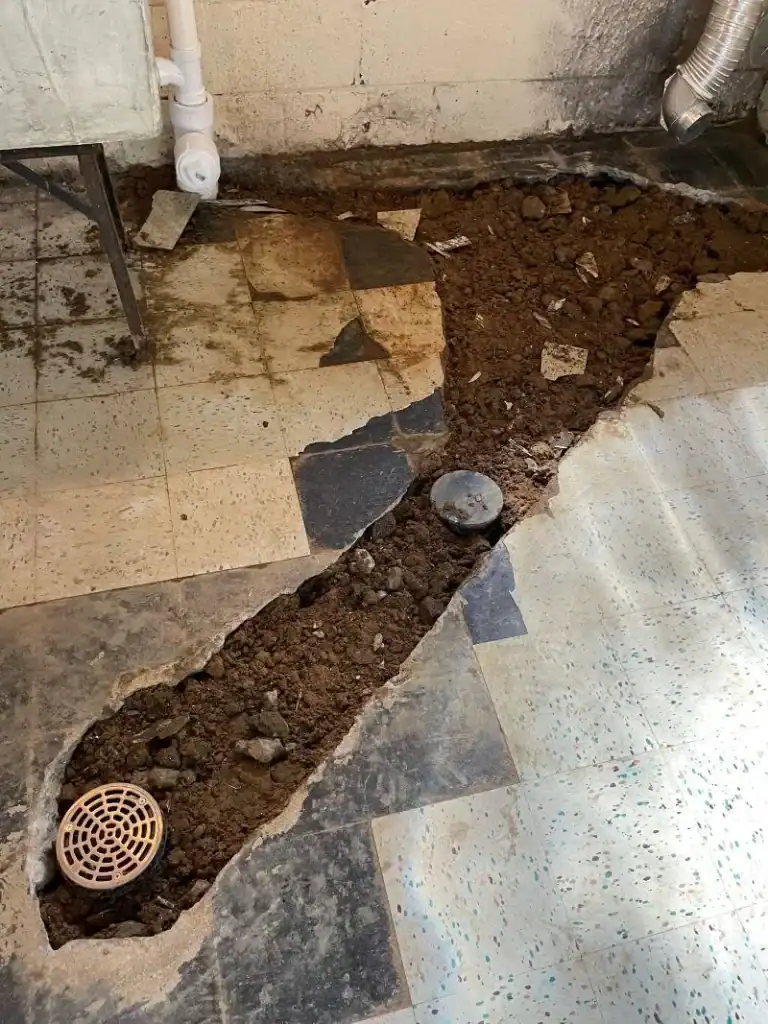
A slab leak can quietly destroy your home’s foundation before you ever notice anything wrong. The problem is that most homeowners do not know what to look for until the damage is already expensive. If you live in San Diego or North County, where homes with slab foundations are extremely common, knowing these warning signs could save you thousands of dollars and a massive headache.
Table of Contents:
- What Is a Slab Leak
- Top 10 Warning Signs
- Why San Diego Homes Are Especially Vulnerable
- What Happens If You Ignore It
- What To Do When You Spot the Signs
- FAQ
- When To Call a Professional
What Is a Slab Leak?
A slab leak occurs when one of the water lines running beneath your home’s concrete foundation develops a crack or hole. These pipes carry pressurized hot and cold water throughout your home and when they fail the water has nowhere to go but into the surrounding soil and eventually upward through your foundation.
Slab leaks are not rare. They are actually one of the most common plumbing emergencies we respond to across Vista, San Marcos, Carlsbad, Oceanside, and Encinitas. Homes built between the 1960s and 1990s are especially vulnerable because the original copper pipe systems from that era are now reaching the end of their lifespan.
10 Warning Signs of a Slab Leak
1. Your Water Bill Suddenly Jumped If your water bill increased significantly without any change in your household usage, water is escaping somewhere. A slab leak allows pressurized water to run continuously into the soil beneath your home — and your meter keeps spinning the whole time.
2. You Can Hear Water Running When Nothing Is On Turn off every fixture in your home — faucets, toilets, dishwasher, washing machine — and then stand quietly. If you can still hear the sound of water moving somewhere in the walls or floor, that is a serious red flag.
3. Warm or Hot Spots on Your Floor This is one of the most telling signs of a hot water slab leak. When the hot water line beneath your slab develops a leak, the escaping hot water warms the concrete above it. Walk barefoot across your tile or hardwood and pay attention to any areas that feel noticeably warmer than the rest.
4. Cracks in Your Walls or Flooring Water saturating the soil beneath your foundation causes it to shift. That movement transfers upward and shows up as cracks in your walls, floors, or even your ceiling. If cracks are appearing in your home with no obvious structural cause, your foundation may be moving due to a slab leak.
5. Damp or Wet Carpet and Flooring If you notice moisture coming up through your flooring — carpet that feels damp, tile that has moisture beneath it, or hardwood that is warping or buckling — water is migrating upward from beneath the slab.
6. Mold or Mildew Smell With No Visible Source A persistent musty smell in a room with no obvious moisture source often means water is present somewhere you cannot see. Slab leaks create ideal conditions for mold growth beneath flooring and inside wall cavities.
7. Low Water Pressure Throughout the House A significant drop in water pressure — especially if it happens suddenly — can indicate a pipe has burst or developed a major leak beneath the slab. The water that should be flowing to your fixtures is instead escaping underground.
8. Your Water Meter Is Moving With Everything Off This is the most reliable DIY check for any hidden leak. Turn off every water source in your home completely, then go outside and look at your water meter. If the dial or digital display is still moving, water is escaping somewhere in your system — and a slab leak is a likely culprit.
9. Pooling Water or Wet Spots in Your Yard In severe slab leaks, water migrates outward through the soil and eventually surfaces in your yard — often near the foundation perimeter. Unexplained wet patches in your lawn or garden, especially during dry weather, deserve immediate attention.
10. Unusually High Water Heater Activity If your hot water heater seems to be running constantly or your hot water runs out faster than usual, a hot water slab leak may be the cause. The system keeps trying to replenish the hot water that is escaping beneath the foundation.
What Happens If You Ignore a Slab Leak
Ignoring a slab leak does not make it go away — it makes it worse. Here is what happens over time when a slab leak goes unaddressed:
- Foundation damage from soil erosion and saturation
- Mold growth inside walls and beneath flooring
- Structural cracking in walls and floors
- Dramatically increased water bills month after month
- Eventual emergency repair that costs 3 to 5 times more than early intervention
A slab leak caught early is a manageable repair. A slab leak discovered after months of damage is a major reconstruction project.
Cost Comparison
| Scenario | Estimated Cost |
|---|---|
| Early detection and spot repair | $500 – $1,500 |
| Delayed repair with minor damage | $2,000 – $4,000 |
| Repair with foundation damage | $8,000 – $20,000+ |
| Full repipe after multiple leaks | $4,000 – $8,000 |
What To Do When You Spot the Signs
Do not wait and see. The moment you notice more than one of the signs above, call a licensed plumber who specializes in slab leak detection. Do not let a general handyman attempt this — slab leak detection requires specialized acoustic and thermal imaging equipment and the experience to interpret what the equipment finds.
At 911 Plumbing & Drain Rescue we use professional-grade detection technology to locate the exact position of the leak before we ever touch your floor. That means targeted access, minimal disruption, and repairs that actually solve the problem.
No. Pipe leaks do not seal themselves. A slab leak will only grow larger over time as water pressure continues to erode the surrounding pipe material.
Most detection visits are completed within 2 to 3 hours. Once located, many repairs are completed the same day.
Many policies cover the cost of accessing the leak but not the pipe repair itself. Check your specific policy and call your insurance provider before work begins.
In most cases yes. We minimize disruption and restore water service as quickly as possible throughout the repair process.
Our detection process rules out above-slab leak sources first. If the leak is confirmed beneath the foundation our equipment will locate it precisely.
One Response